Lifted or missing shingles
Wind can loosen, crease, lift, or remove shingles and expose underlayment or roof decking to rain.

Wind, heavy rain, falling debris, and severe weather can damage shingles, tile, flashing, underlayment, roof decking, and low-slope membranes. A useful storm repair starts by documenting what changed, protecting active openings, and separating new storm-related damage from older roof conditions before permanent work begins.
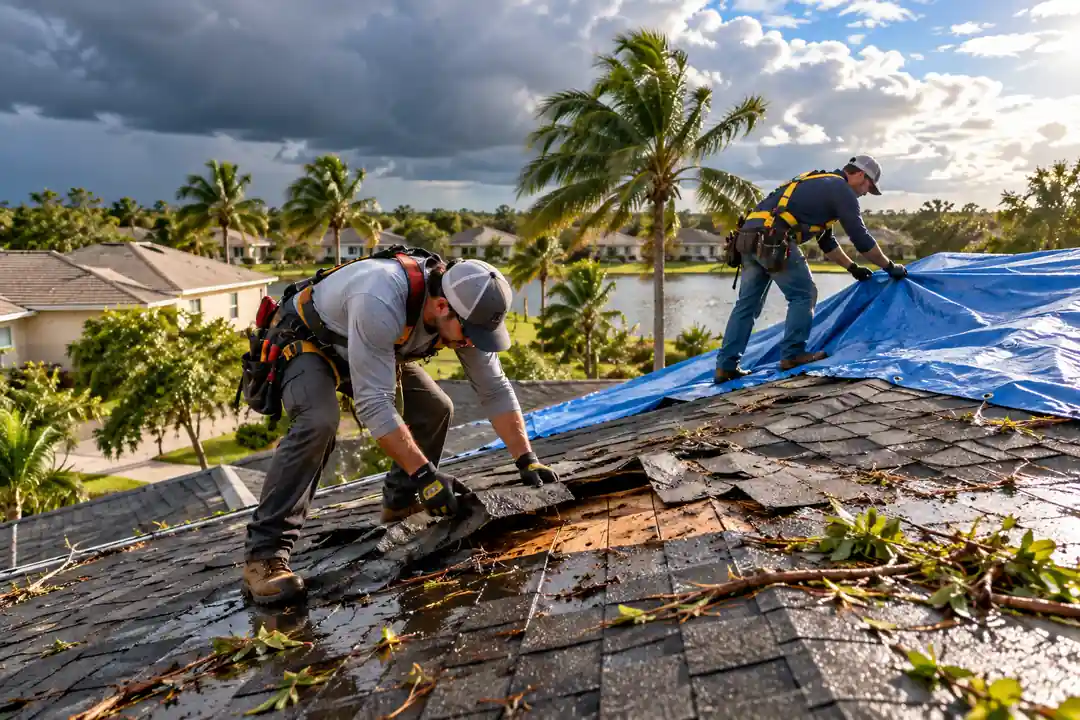
Storm damage can involve wind uplift, debris impact, flashing movement, broken tile, membrane damage, or water intrusion. The repair should follow the actual damage pattern rather than assume every post-storm leak has the same cause.
Wind can loosen, crease, lift, or remove shingles and expose underlayment or roof decking to rain.
Branches and airborne debris can puncture roof coverings, damage flashing, crack tile, or break the deck below.
Wind-driven rain can reveal weak flashing, open seams, displaced roofing, damaged penetrations, or openings created during the storm.
Tile roofs, flat membranes, skylight areas, valleys, vents, and wall transitions can each respond differently to wind and impact.
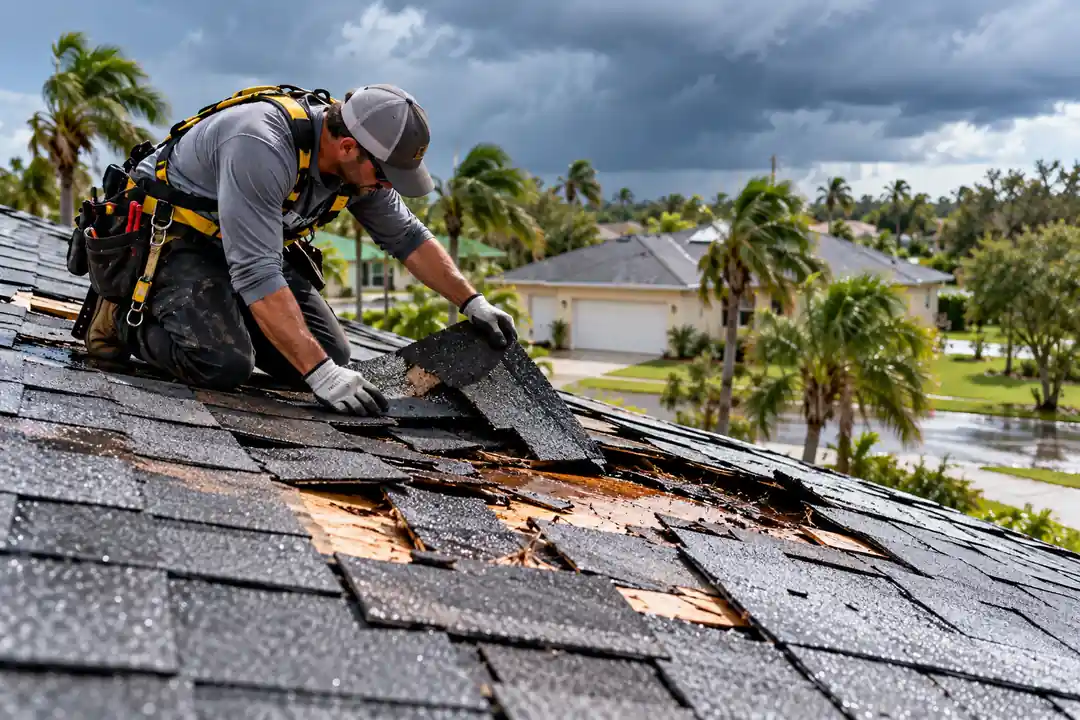
A ceiling stain after a storm tells you water reached the interior; it does not automatically identify where the roof was breached. Compare the weather event, visible roof changes, and interior moisture pattern before defining the repair.
FEMA discusses wind damage to asphalt shingles, but Lakeland homes and buildings also use tile, metal, TPO, modified bitumen, and other systems. Each needs inspection based on how that material is attached, flashed, and waterproofed.
Lifted, creased, torn, or missing shingles can expose underlayment and deck areas. Damage can be localized or spread across more than one roof slope.
Impact or wind can break or shift tile, while hidden underlayment and flashing still need inspection before the visible tile is replaced.
Debris, membrane damage, opened seams, drain conditions, and displaced rooftop components can create storm-related leak paths.
High winds can stress roof edges, panels, fasteners, ridge or transition details, and flashing even when much of the covering stays in place.
If shingles, tile, membrane, flashing, or decking have been displaced enough to leave an active opening, the first goal is to limit additional water entry without creating a new unsafe condition. Temporary covering can protect the exposed area until the permanent repair scope is confirmed.
Do not climb onto a wet or damaged roof during active weather. FEMA emphasizes roof-covering performance and secondary water protection because water intrusion can continue after wind damages the primary covering.
See the broader Roof Leak Repair guidance →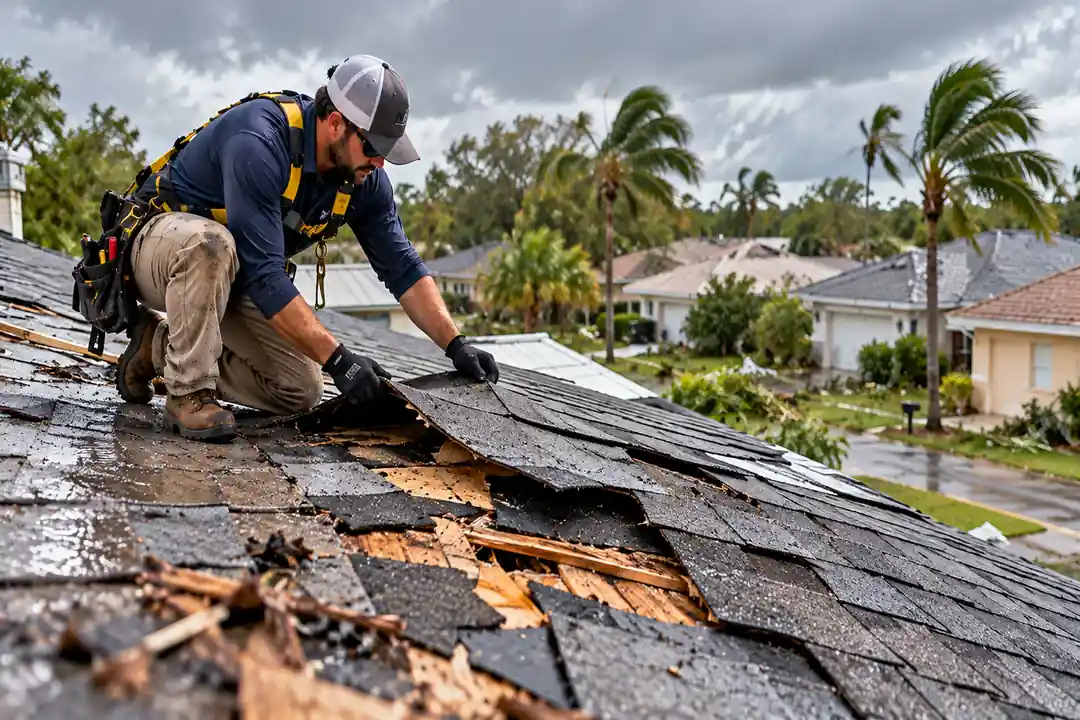
Document first, protect active openings, then define the permanent repair after the full affected area has been inspected.
Photograph missing roofing, debris impact, displaced flashing, interior moisture, and affected roof areas before permanent work covers them.
Where practical and safe, temporary protection can reduce additional water entry until permanent work is ready.
Check surrounding roofing, underlayment, deck, flashings, valleys, penetrations, and roof edges—not only the most obvious damaged spot.
Previous repairs, aging, wear, and pre-existing deterioration should be distinguished from damage consistent with the recent weather event.
A focused repair can work when damage is localized and surrounding materials remain serviceable; widespread failure can require more extensive work.
Repair the covering, waterproofing, flashing, drainage, or decking components actually affected and recheck the finished area.
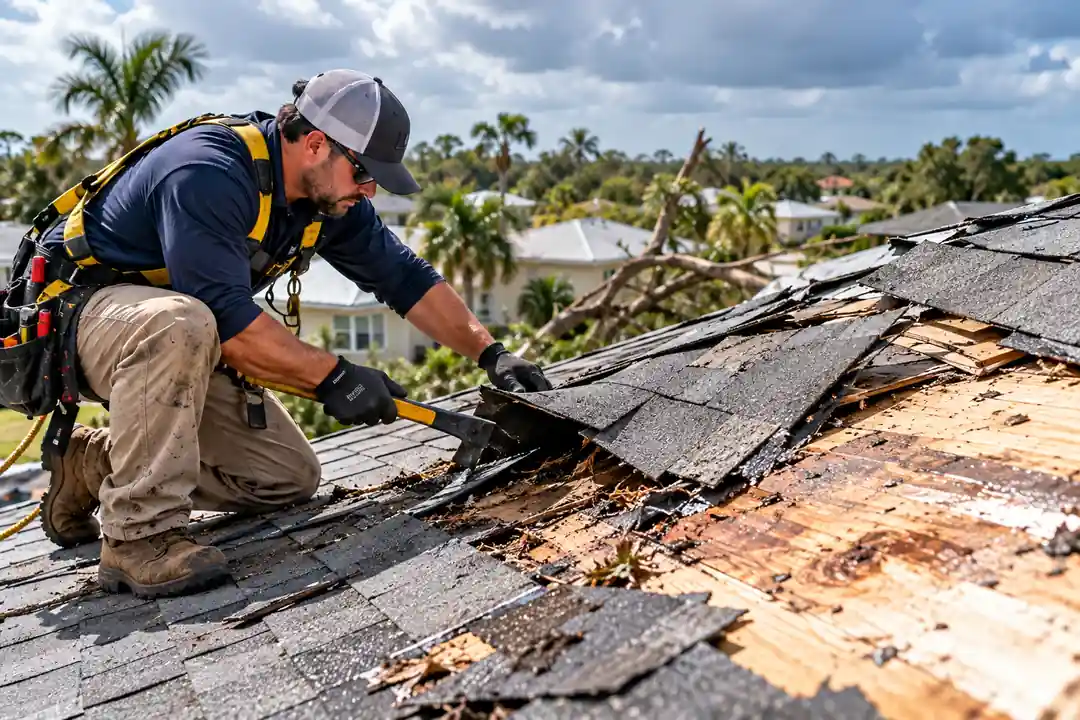
A localized repair is more practical when the damaged section is clearly defined and the surrounding roof can be restored without relying on a chain of temporary patches.
Central Florida severe weather can combine wind pressure, rapid rainfall, and airborne debris. That combination can lift or break roof coverings while pushing water toward newly exposed underlayment, flashing transitions, valleys, and penetrations.
The City of Lakeland states that roof repairs require roofing permits and lists shingle, metal, tile/slate, modified bitumen, TPO, and composite systems. Its storm-repair information also says storm-related roof repair over 100 square feet or full roof replacement requires a permit. Because city pages describe both general roof-repair permitting and a storm-event threshold, confirm the property jurisdiction and final scope before work begins.
Review City of Lakeland roofing permit guidance →This page owns post-storm roof-damage intent. When the affected component is already clear, a narrower service page can provide more relevant repair detail.
If damage centers around a wall, chimney, vent, or transition, use Roof Flashing Repair.
If clay or concrete tile, underlayment, valleys, or tile attachment are involved, use Tile Roof Repair.
If debris, seams, drains, or low-slope membrane damage are involved, use Flat Roof Repair.
Photos and notes can preserve the condition of the property before temporary covering or permanent repairs change what is visible. Keep documentation factual: what you see, where it is, and when it appeared.
From a safe location, photograph missing roofing, fallen branches, displaced metal, damaged gutters, or visible openings.
Record ceiling stains, active drips, damp walls, wet insulation, or damaged finishes and note when they first appeared.
Photograph exposed areas before and after temporary covering so the original condition is not lost.
Keep estimates, invoices, permit information, and photographs together. If insurance is involved, follow the requirements of your own policy and insurer.
Practical answers for Lakeland property owners trying to understand roof damage after wind, heavy rain, or debris impact.
Protect people and belongings indoors, stay off the wet or damaged roof, document visible conditions from safe locations, and arrange an inspection of the affected roof areas.
Yes. Wind can lift, loosen, or crease roof coverings and stress edges or flashing without leaving a large missing section.
No. Localized storm damage may be repairable when the affected area is defined and surrounding roofing remains serviceable. Widespread damage can require a broader scope.
Temporary covering can help limit additional water entry, but roof access after a storm can be dangerous. Do not climb onto a wet, unstable, or actively storm-exposed roof yourself.
Yes. Tile can crack or shift, while flat-roof membranes can be punctured or damaged at seams, drains, flashings, and penetrations.
City guidance says roof repairs require roofing permits. Its storm-repair page also identifies roof repair over 100 square feet or full replacement as permit-required for that storm-related guidance. Confirm the final scope and jurisdiction with the city.
Share when the storm occurred, what you can see from the ground, whether water is entering, and which roof area appears affected.