Failed or poorly integrated flashing
Water can move behind the roofing when the flashing is loose, damaged, poorly overlapped, or no longer integrated correctly with the surrounding roof.

Water around a skylight does not automatically mean the skylight itself needs replacement. The problem may involve flashing, surrounding roofing, the skylight assembly, or even condensation inside the home.
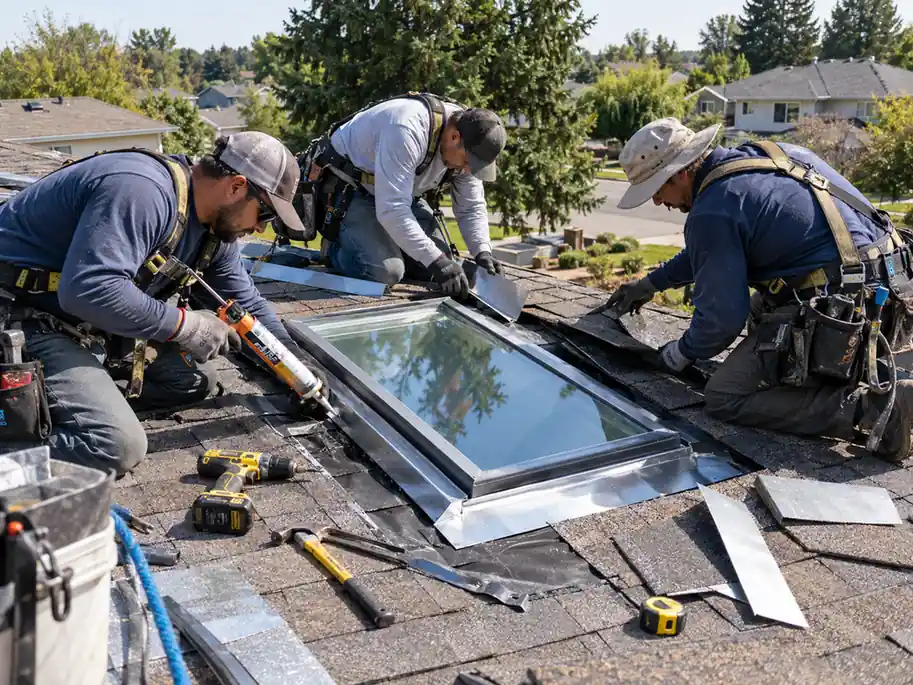
A leaking skylight can be caused by failed flashing, damaged roofing around the opening, problems with the skylight frame or seals, cracked glazing, or condensation that only looks like an exterior roof leak. The useful first step is identifying which component is actually failing.
A skylight creates an opening in the roof system, so several separate materials have to manage water correctly in a very small area.
Water can move behind the roofing when the flashing is loose, damaged, poorly overlapped, or no longer integrated correctly with the surrounding roof.
A shingle, underlayment, or other roof defect upslope can allow water to travel toward the skylight before it becomes visible indoors.
The skylight assembly itself may be responsible when seals, joints, glazing, or the frame have deteriorated or been physically damaged.
Interior humidity can create moisture on the skylight glass or frame even when rainwater is not entering through the roof.
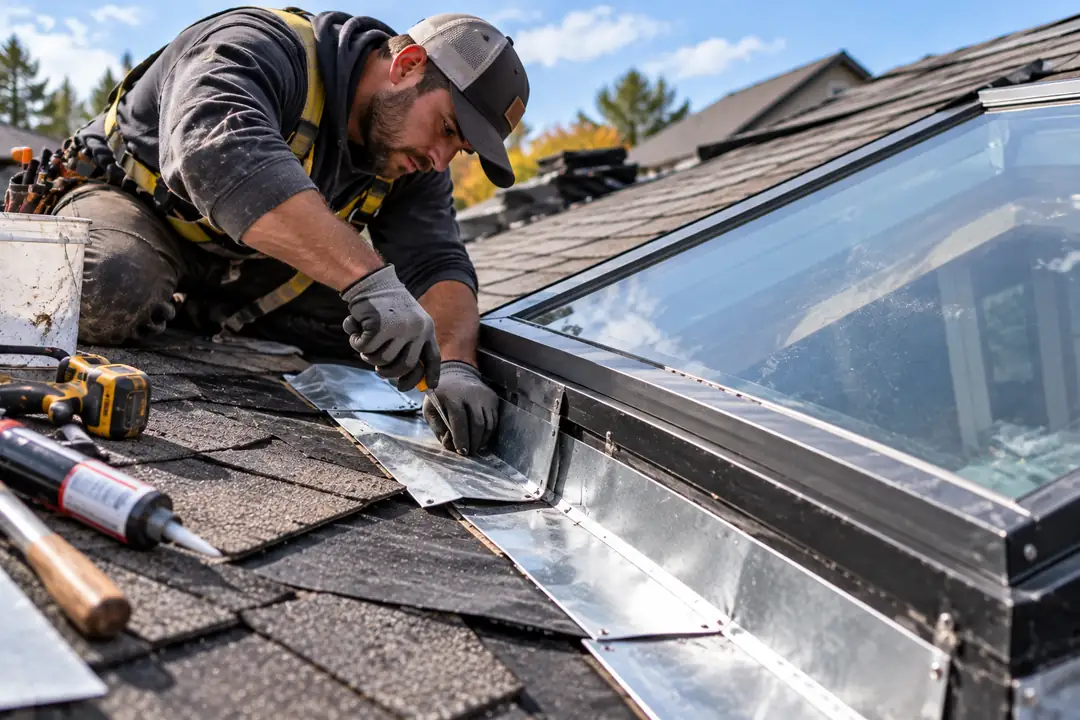
The most useful clues are when, where, and how the moisture appears.
An exterior water-entry problem becomes more likely, but the source could still be the flashing, roof, or skylight assembly.
A vulnerable transition may only leak when water volume increases or wind pushes rain toward one side of the unit.
Condensation becomes more likely—especially if it happens when it is not raining.
That is different from rainwater entering around the skylight and may point toward glazing-seal failure.
Head, side, and downslope flashing details work with the surrounding roofing to move water around the skylight opening and back onto the roof surface.
If a flashing detail fails, replacing or resealing the skylight alone may not stop the leak. Likewise, not every leak around a skylight is a flashing problem.
Learn about Roof Flashing Repair in Lakeland →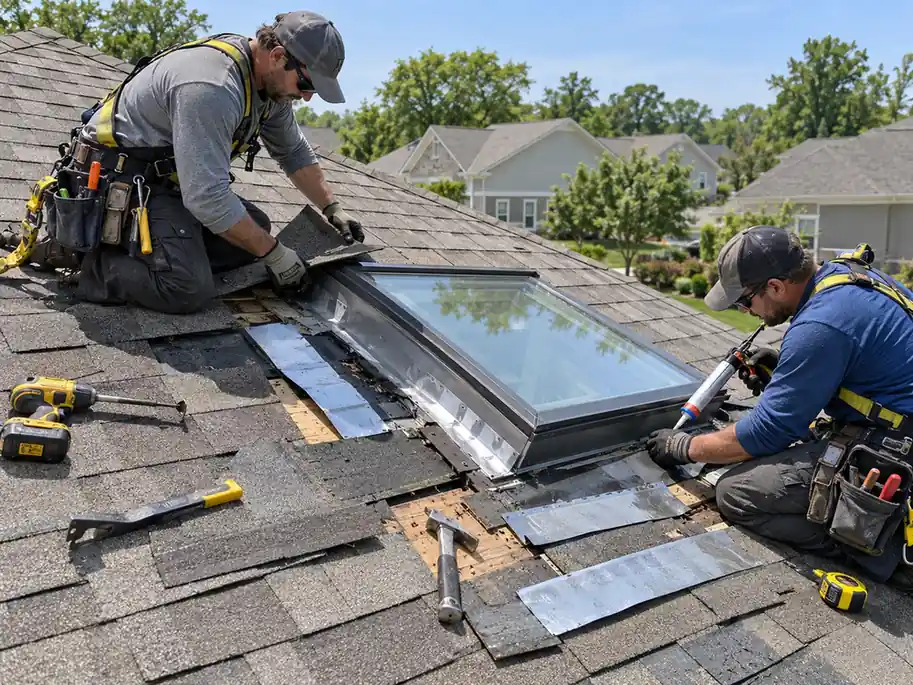
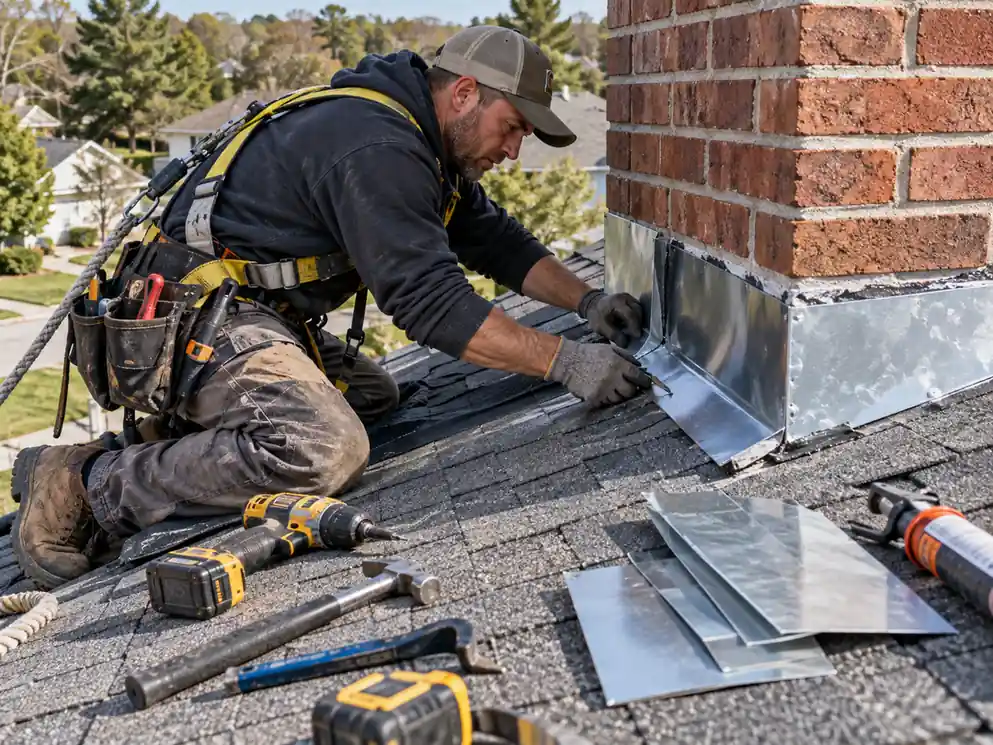
Skylights are one of several roof penetrations that depend on properly integrated flashing. Chimneys, walls, and vents use different flashing details, but the same principle applies: water must be redirected back onto the roof surface instead of behind the roofing.
If diagnosis shows that the main problem is the flashing system rather than the skylight unit itself, the related flashing service may be the more appropriate repair path.
Explore Roof Flashing Repair →The goal is to identify the failed component before deciding whether the practical solution is a roof repair, flashing repair, skylight repair, or replacement.
When, where, and under what weather conditions the moisture appears can narrow the source.
Roofing above and around the skylight may reveal an entry path outside the unit itself.
Head, side, and lower flashing details should route water around the opening.
Frame, glazing, seals, curb, and other visible components are considered where relevant.
Interior moisture formation and exterior rainwater intrusion require different solutions.
The final scope should follow the failed component and condition of the unit—not a blanket rule.
Often, yes. The answer depends on whether the roof detail, flashing, or the skylight unit itself has failed.
Surface caulk cannot correct every flashing overlap, roof defect, glazing issue, frame problem, or water path above the skylight.
Lakeland experiences the seasonal thunderstorms, heavy rainfall, humidity, and wind-driven weather common across West Central Florida. A marginal skylight or flashing detail may stay dry in a light shower and leak when rain volume or wind exposure increases.
Protect people and the interior first. Avoid climbing onto a wet roof. Once conditions are safe, the roof and skylight can be evaluated together.
A skylight leak can range from a localized roofing problem to work involving the skylight assembly itself.
City of Lakeland guidance states that roof repairs generally require permits subject to limited exceptions, and skylight replacement is specifically listed among permit-required storm repairs. Because a leaking skylight may require anything from localized roof work to replacement of the unit, the permit requirement should be confirmed after the actual scope is established.
You do not need to know whether the roof, flashing, or skylight is responsible before asking for help.
Moisture appears around the skylight during or after rain.
The service begins with diagnosis rather than assuming the skylight itself needs replacement.
The original water path may still be present behind the visible surface repair.
These support pages answer diagnostic, storm-pattern, decision, and cost questions without duplicating the commercial Skylight Leak Repair service page.
Use timing and moisture location to separate indoor condensation from exterior water entry.
Read guide → Problem patternUnderstand how runoff volume and wind-driven rain can expose vulnerable details.
Read guide → DecisionUse the failed component and unit condition to choose the practical scope.
Read guide → CostSee which scope, access, roof, and permit factors change the final price.
Read guide →Short answers to the questions homeowners usually ask before deciding whether they need roof work, skylight repair, or replacement.
Water around a skylight can come from failed flashing, damaged surrounding roofing, the skylight frame or seals, glazing damage, or another roof leak above the opening. The interior stain alone cannot confirm the source.
Yes, when flashing is the failed component and the skylight and surrounding roof remain serviceable. The flashing still needs to be integrated correctly with the roof rather than simply covered with surface sealant.
No. Some leaks originate in flashing or nearby roofing rather than the skylight itself. Replacement becomes more relevant when the unit is damaged, deteriorated, or has a failure that cannot reasonably be corrected with localized repair.
Yes. Condensation can form on the glass or frame and drip onto nearby finishes even when rainwater is not entering through the roof.
Heavier rain increases the amount of water moving toward the skylight, while wind can push water toward vulnerable joints from different directions. A marginal detail may therefore leak during stronger storms while remaining dry in lighter rain.
Not always. Sealant can be part of certain details, but it cannot correct every flashing overlap, damaged roof material, failed glazing, deteriorated component, or water path above the skylight.
It depends on the work. City of Lakeland guidance says roof repairs generally require permits subject to limited exceptions, and skylight replacement is specifically listed as permit-required work. The requirement should be confirmed after the actual scope is known.
Share where the moisture appears, when it happens, and whether the leak changes during heavy or wind-driven rain.
Testing mode: this form does not send yet. A production form handler and Google reCAPTCHA will be connected before launch.
The useful next step is separating roof leakage, flashing failure, skylight-unit problems, and condensation.