Water appears near a chimney
Chimneys create several roof transitions. Flashing, nearby shingles, masonry, and the upslope detail all need to be considered together.

Water showing up near a chimney, exterior wall, skylight, vent, or roof transition can point to failed flashing. The right repair starts by identifying the water path and correcting the detail that is actually letting moisture in.
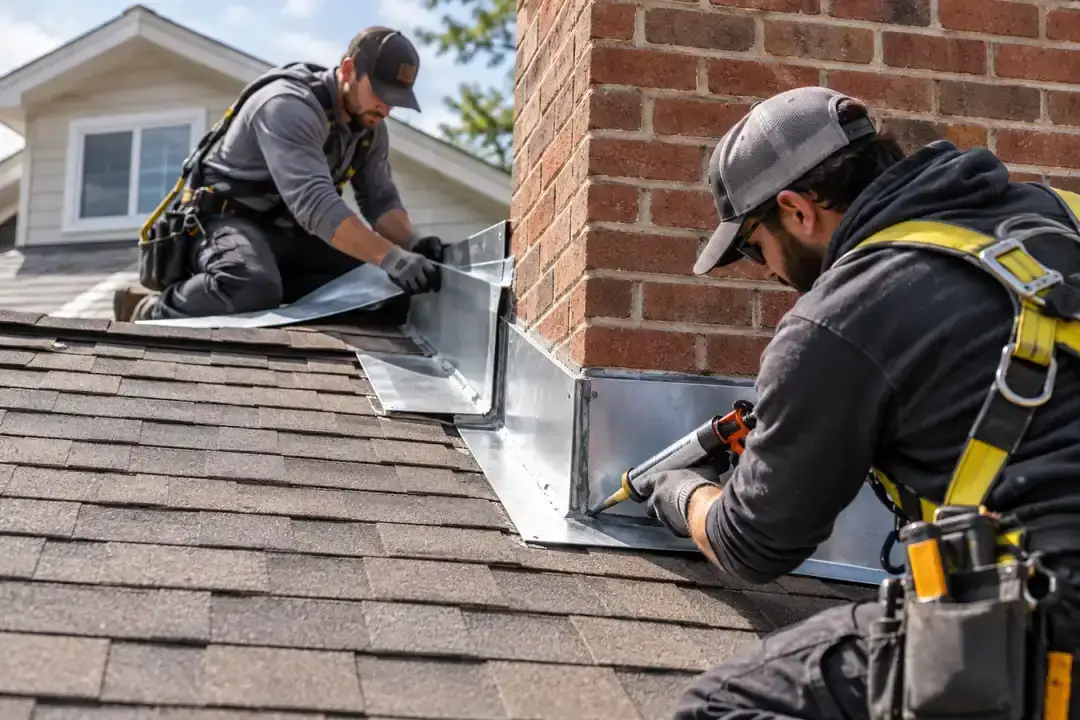
Roof flashing repair corrects damaged or poorly performing water-shedding details where the roof meets another surface or opening. A proper repair addresses the failed transition and surrounding roofing so water is directed back onto the roof instead of moving underneath it.
A stain indoors does not prove flashing is the problem. The leak location, weather pattern, and nearby roof details provide better clues.
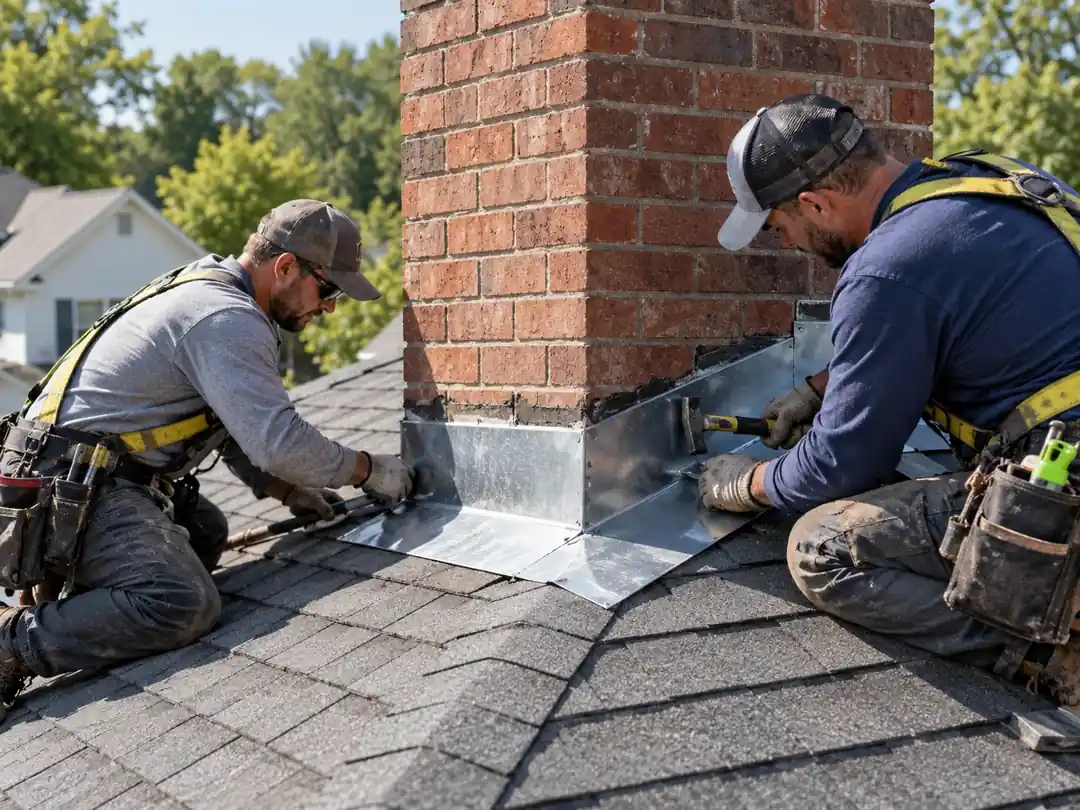
Chimneys create several roof transitions. Flashing, nearby shingles, masonry, and the upslope detail all need to be considered together.
Where a sloped roof meets a vertical wall, step flashing and related details must return runoff to the roof surface.
Some transition leaks stay hidden in light rain and appear only when wind pushes water toward the joint.
Visible separation or layers of old sealant can indicate that the underlying water-shedding detail needs closer inspection.
Different roof transitions use different details. The repair should match the component, roof material, and way water moves through that area.
Step flashing and adjoining wall details help move runoff away from the intersection between a sloped roof and vertical wall.
Chimney leaks can involve step flashing, counter-flashing, the upslope side, surrounding shingles, or nearby masonry conditions.
Water around a skylight may come from its flashing system, curb, surrounding roofing, sealants, or the skylight assembly itself.
See Skylight Leak Repair →Vents and roof openings depend on properly integrated flashing, boots or collars, surrounding shingles, and secure attachment points.
Roof leaks do not always travel straight down. Water can move along decking, framing, underlayment, nails, and other surfaces before becoming visible inside the home.
That means the diagnosis should consider the interior moisture location, recent weather, attic evidence where accessible, nearby penetrations, surrounding roof materials, and the condition of the transition itself.
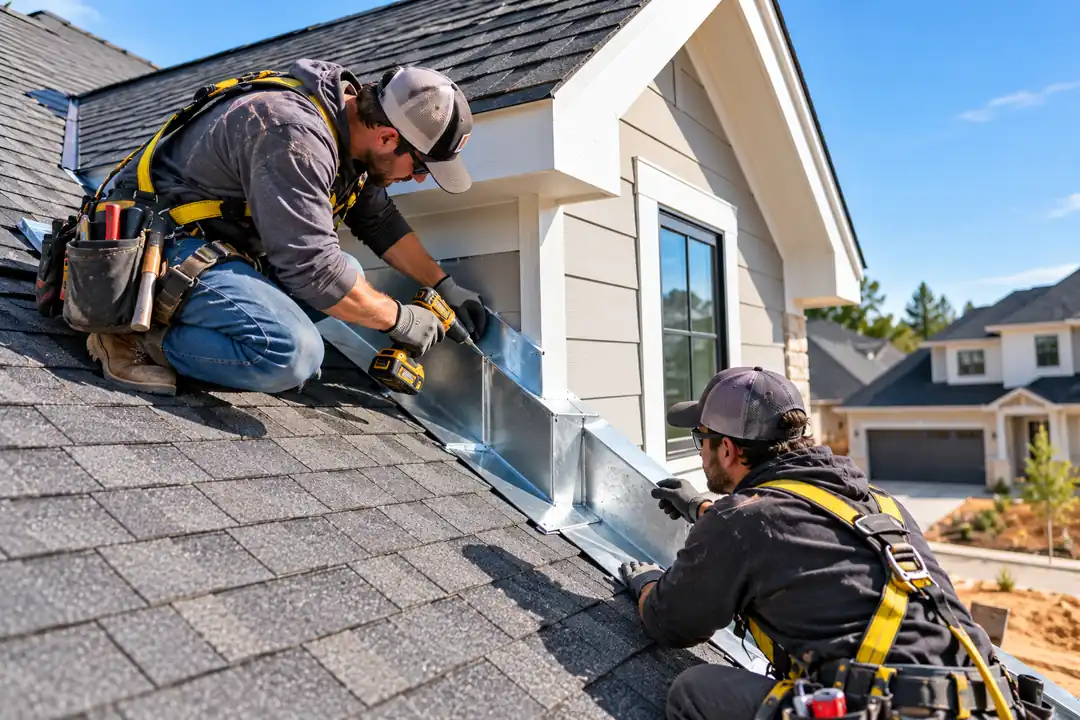
The objective is to repair the water-shedding system—not simply cover the visible area with another surface patch.
When, where, and under what weather conditions the leak appears can narrow the likely source.
Flashing, surrounding roofing, fasteners, sealants, wall interfaces, and penetrations are evaluated together.
The failed component is confirmed before deciding whether the repair is localized or broader.
The repair method depends on the flashing type, roof material, geometry, and substrate condition.
Any opened roofing materials are integrated back into the same water-shedding assembly.
A flashing leak does not automatically mean the whole roof needs replacement. The surrounding roof condition matters.
Caulk or roofing cement can be appropriate in specific details, but another surface bead will not correct a failed overlap, loose metal, damaged substrate, or poorly integrated flashing system.
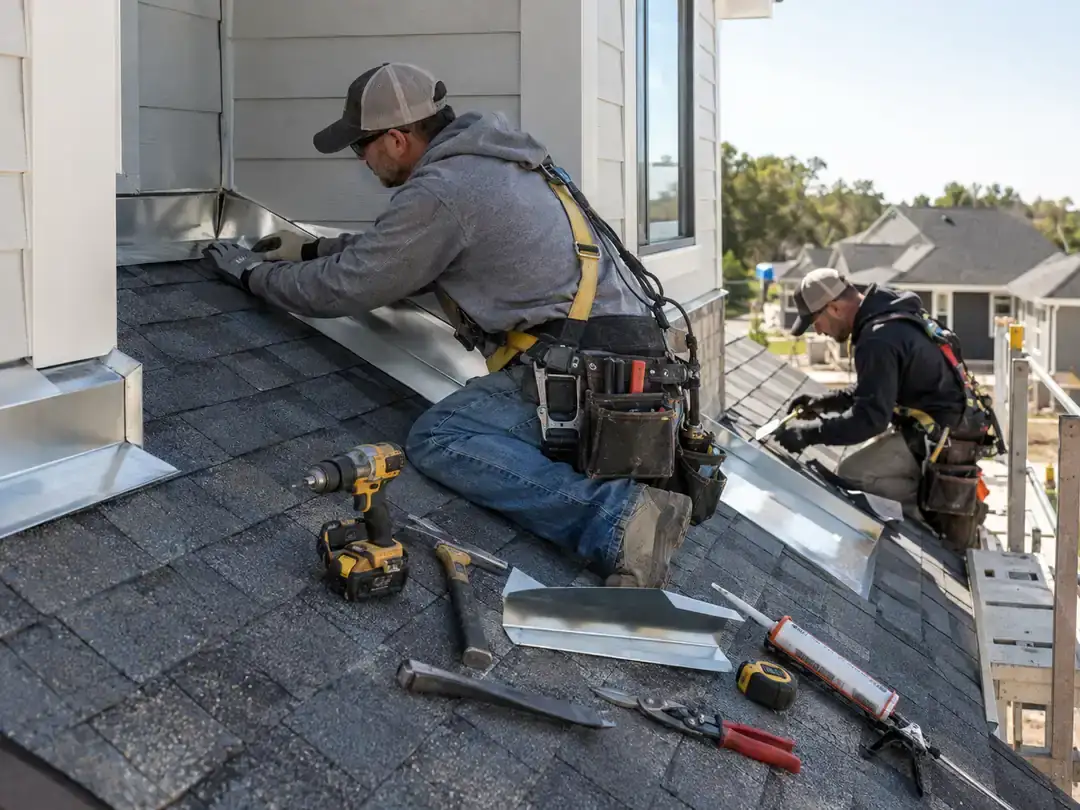
Lakeland experiences the seasonal thunderstorms and heavy rain common across West Central Florida. Some flashing defects appear only when stronger rain or wind pushes water toward a wall, chimney, skylight, vent, or roof transition.
Prioritize personal safety and interior protection first. Avoid climbing onto a wet roof. Once conditions are safe, the leak path and affected transition can be evaluated.
There is no useful one-price-fits-all answer because flashing repair can mean very different work depending on what must be opened, repaired, and restored.
City of Lakeland guidance states that roof repairs generally require roofing permits, while minor roof-shingle repair under 25 square feet is listed as an exception. Because flashing repairs vary, the property jurisdiction and proposed scope should be confirmed before work begins.
If the source is unclear, begin with the broader roof leak diagnosis rather than assuming flashing is responsible.
The moisture is close to a roof-to-wall intersection, chimney chase, or another vertical transition.
The leak appears around a roof opening where flashing or a related boot/collar detail is required.
The leak is intermittent and shows up mainly during heavy or wind-driven rain.
Concise answers to the questions homeowners usually ask before deciding what to do next.
Roof flashing is a water-shedding material used at vulnerable roof joints, penetrations, edges, and transitions to direct water away from areas where it could move beneath the roofing.
Possible causes include separation, physical damage, corrosion, failed attachment points, improper overlaps, surrounding roof deterioration, previous poor repairs, or movement between adjoining building materials.
Yes. Some flashing problems become noticeable mainly during heavy or wind-driven rain because water reaches the transition differently than it does during lighter rainfall.
No. Chimney flashing is one possible source, but surrounding roofing, masonry, adjacent roof transitions, or another nearby water path may also be responsible.
Often, yes. If the problem is localized and the surrounding roof remains serviceable, the flashing and nearby roofing can often be repaired without replacing the entire roof.
Not necessarily. Sealant can be appropriate in certain details, but it does not correct improper overlaps, loose materials, damaged substrate, or other underlying failures.
Some do. City of Lakeland guidance says roof repairs generally require roofing permits, while limited exceptions exist for certain minor work. The actual scope and property jurisdiction should be checked before work begins.
Share where the leak appears, what type of roof you have if known, and whether the problem happens during light rain, heavy rain, wind-driven rain, or every storm.
Testing mode: this form does not send yet. A production form handler and Google reCAPTCHA will be connected before launch.
If the leak is near flashing, the useful next step is understanding the transition, the weather pattern, and the surrounding roof condition.