Open or stressed seams
Single-ply membrane laps and welded seams can become vulnerable when they separate, wrinkle, or lose adhesion.

Leaks on a flat or low-slope roof can come from open membrane seams, punctures, failed flashing, roof penetrations, drains, or water that is not moving off the roof as intended. A durable repair starts by identifying the membrane type, tracing the water path, and fixing the detail that is actually failing.
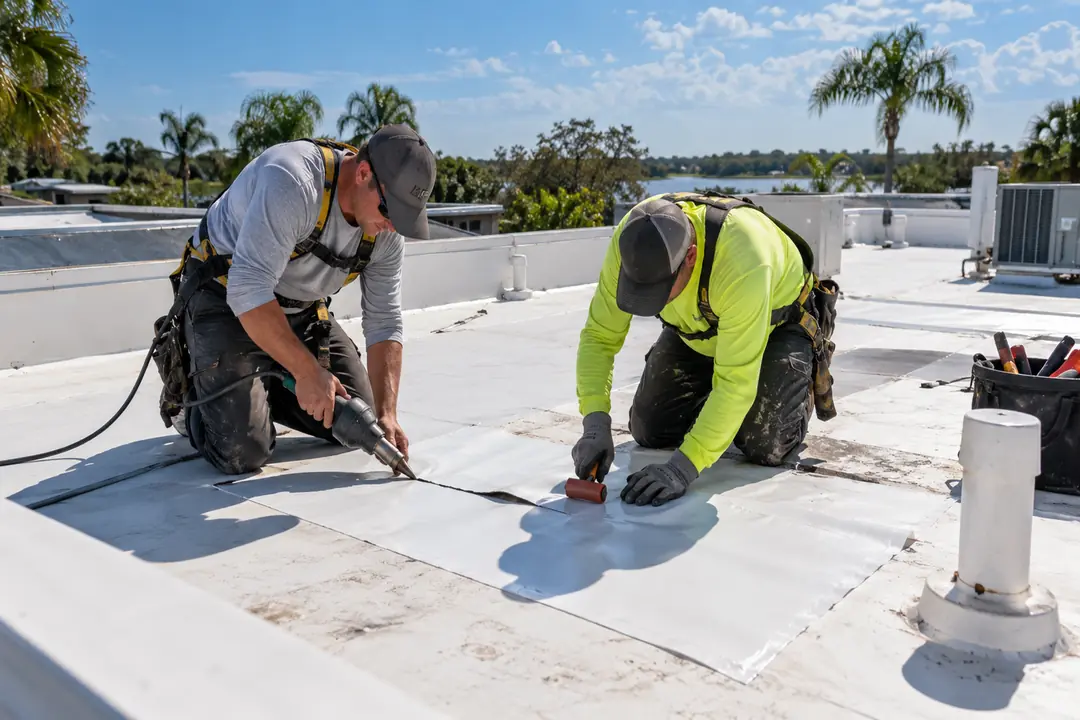
Flat-roof problems behave differently from typical shingle leaks. The membrane, seams, drainage path, penetrations, and edge details all need to work together.
Single-ply membrane laps and welded seams can become vulnerable when they separate, wrinkle, or lose adhesion.
Foot traffic, debris, equipment work, or impact can damage a membrane and create a localized water-entry point.
Vents, pipes, equipment curbs, parapets, and other transitions rely on compatible flashing details that must remain watertight.
Water that remains around drains, low areas, or blocked scuppers can expose weak membrane details and requires the drainage condition to be evaluated—not just patched over.
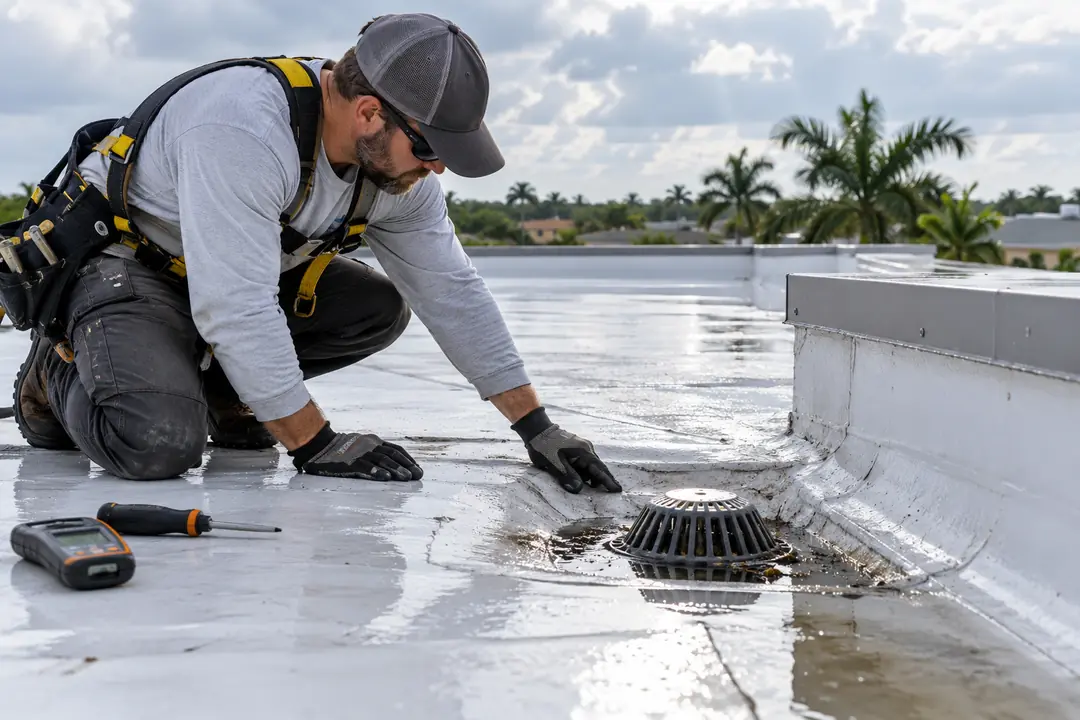
Water can move across or beneath parts of a low-slope roof assembly before it becomes visible indoors. That is why a repair should begin with the roof surface and the leak pattern—not only the ceiling stain.
Industry guidance for low-slope roof repair distinguishes between membrane systems because the correct preparation, patching, welding, adhesives, and flashing methods depend on the roof that is actually installed.
Repairs may involve compatible membrane patches, seam work, and penetration flashing after the surface is properly cleaned and prepared.
Damage may involve laps, surface wear, flashing, or localized membrane deterioration. Repair materials and attachment methods need to match the existing system.
Localized defects can involve membrane plies, surfacing, flashings, or drainage areas. The condition of the surrounding assembly matters before a patch is selected.
If the membrane type is uncertain, identifying the system first helps avoid using an incompatible coating, adhesive, patch, or flashing material.
Pipes, vents, parapet walls, curbs, drains, and equipment supports interrupt the membrane. These details must transition from the horizontal roof surface to another component without creating a path for water.
If the problem is primarily a flashing failure at a wall, curb, or penetration, the repair may overlap with our Roof Flashing Repair service. The goal is to match the service to the failed detail rather than create overlapping repairs.
See common roof flashing leak signs →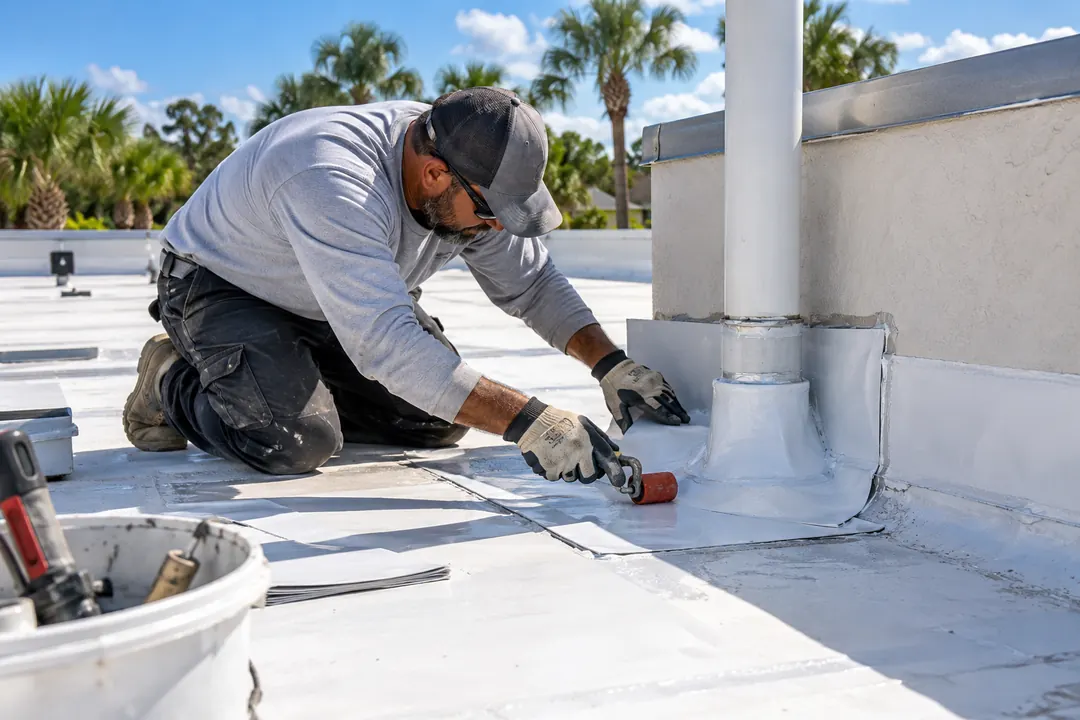
The repair should follow the cause, membrane condition, and amount of wet material—not a generic patch applied to every leak.
Note where moisture appears indoors, when it happens, and whether heavy or wind-driven rain changes the symptom.
Determine the membrane type and inspect seams, penetrations, edges, drains, previous repairs, and visible surface damage.
Separate a localized membrane defect from broader moisture, drainage, insulation, or substrate damage.
Prepare the surface and use the patching, welding, adhesive, flashing, or replacement method appropriate to that system.
If drains, scuppers, curbs, or terminations are part of the problem, the repair must address those conditions too.
The finished repair should be inspected for secure seams, watertight transitions, and a clear drainage path.
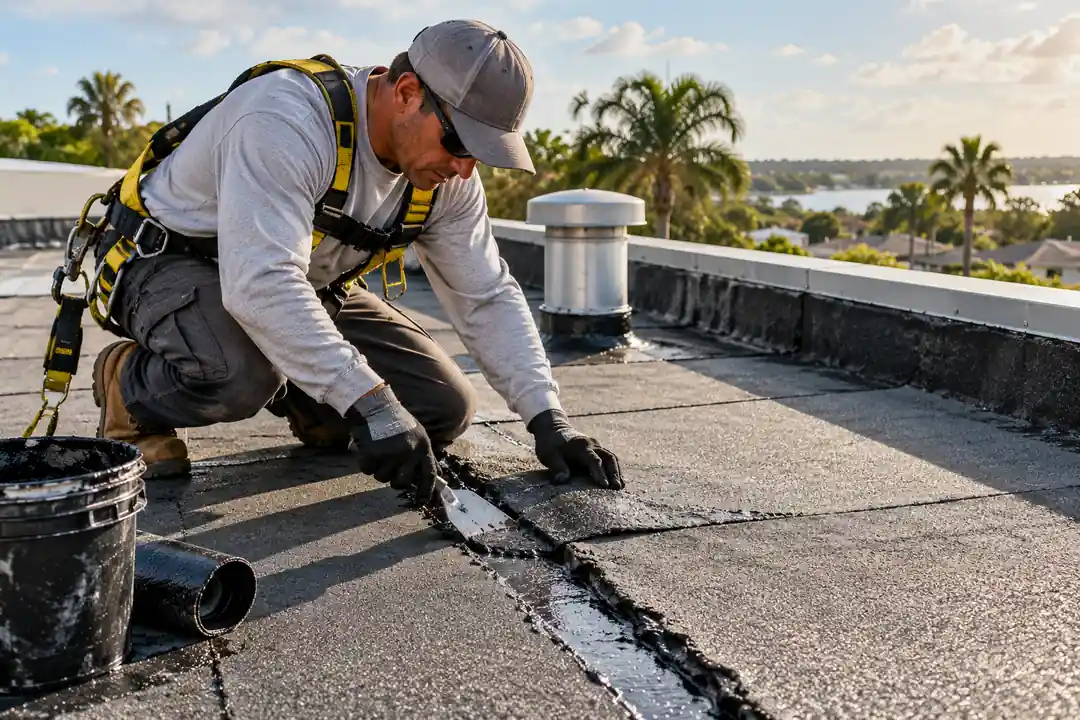
A targeted repair is most practical when the defect is limited, the surrounding membrane remains serviceable, and moisture has not spread through a large part of the roof assembly.
If debris, displaced rooftop equipment, wind, or heavy rain caused a sudden membrane problem, see Storm Damage Roof Repair for the event-specific inspection and documentation path.
Central Florida rain can place a lot of water on a low-slope roof in a short period. Strong sun and repeated heating also put membranes, seams, and flashings through regular expansion and weather exposure. A reliable repair considers both the immediate leak and how the roof is expected to drain during future storms.
Learn how to separate temporary drainage from recurring ponding, blocked drains, low spots, and membrane conditions before assuming the entire roof is failing.
City of Lakeland guidance states that roof repairs require roofing permits and specifically lists modified bitumen and TPO among roofing systems covered by its permit guidance. The exact requirement depends on the property jurisdiction and final repair scope, so permitting should be confirmed before work begins.
Review City of Lakeland roofing permit guidance →This page is intentionally separate from broad Roof Leak Repair, Roof Flashing Repair, and Skylight Leak Repair so each service keeps a clear search intent.
The leak is on a roof section covered by TPO, modified bitumen, built-up roofing, or another membrane system.
The visible problem is tied to a membrane seam, surface damage, penetration, drain, scupper, parapet, or equipment curb.
Water remains in low areas after rain or the leak pattern appears connected to drainage components.
Practical answers for property owners trying to understand a low-slope roof leak before choosing a repair.
No. A properly designed low-slope roof still needs positive drainage toward drains, scuppers, or edges. The exact drainage design depends on the roof assembly and building.
Common sources include open seams, punctures, deteriorated membrane areas, failed penetration flashing, wall or curb transitions, drain details, previous repairs, and drainage problems.
Often, yes, when the failure is localized and the surrounding membrane and underlying materials remain serviceable. Widespread moisture or deterioration can require a larger scope.
Not automatically, but persistent ponding is a condition that should be evaluated. The drain path, roof surface, membrane condition, and affected assembly all matter before deciding on a repair.
No. They are different roofing systems and can require different preparation, membrane materials, adhesives, welding, surfacing, and flashing methods.
Yes. Moisture can move within parts of a roof assembly before becoming visible indoors, which is why the roof surface and surrounding details need to be inspected rather than repairing only above the interior stain.
City of Lakeland guidance says roof repairs require roofing permits and lists TPO and modified bitumen among roofing systems covered by its roofing-permit guidance. Jurisdiction and final scope should be confirmed for the actual property.
Share the roof system if you know it, where the leak appears, whether water remains on the roof after rain, and whether the problem is near a seam, drain, wall, pipe, vent, or equipment curb.