Moisture appears during rain
Staining that develops while it is raining deserves roof, flashing, and skylight evaluation rather than being treated as indoor humidity alone.

Updated October 1, 2026
Moisture around a skylight can come from outside the roof—or form inside the home. The timing and location of the moisture can help separate condensation from a likely exterior leak before anyone starts guessing at a repair.
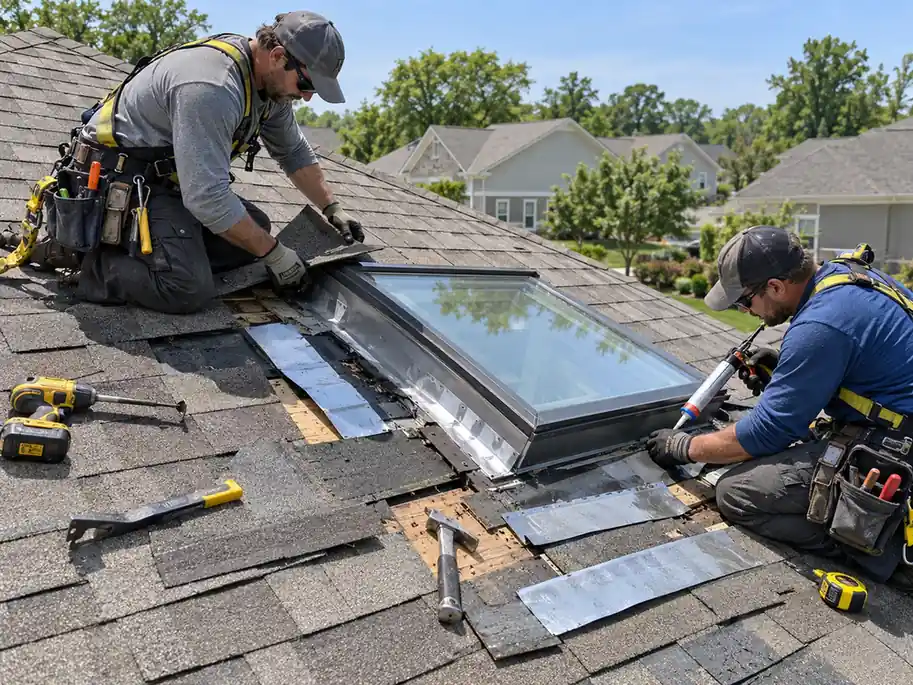
Condensation forms when warm, moisture-laden indoor air meets a cooler skylight surface. A roof leak involves exterior water entering through the roofing, flashing, skylight assembly, or another nearby path.
The visible drip can look similar in both cases. That is why timing, location, and weather conditions are usually more useful than the stain by itself.
Does the moisture appear only while it is raining, or can droplets form on the glass or frame when the weather outside is dry?
No single sign proves the roof is leaking, but several patterns make an exterior water path more likely.
Staining that develops while it is raining deserves roof, flashing, and skylight evaluation rather than being treated as indoor humidity alone.
More runoff or wind pressure can expose a weak flashing or roof detail that stays dry during light showers.
A consistent wet area may help narrow the inspection, although water can travel before becoming visible indoors.
Repeated patching without a lasting result can mean the original water path was never corrected.

Condensation becomes more plausible when droplets form directly on the interior glass or frame, especially if the same pattern appears when it is not raining. Indoor humidity, cooking, bathing, temperature differences, and limited air circulation can all influence how much moisture collects on a skylight.
Moisture trapped between insulated glass panes is different again. That can indicate a glazing-seal problem rather than either room-side condensation or a roof leak.
Take a photo of where the moisture first appears, then note the weather conditions. If the glass is wet, photograph the glass itself before wiping it. If drywall or trim is stained, note whether the stain grows only during rain or remains damp afterward.
You do not need to diagnose the component yourself. A short record of the pattern is enough to make the first conversation more useful.
Surface sealant can be appropriate in specific details, but it cannot fix every roof, flashing, glazing, or condensation issue. Adding caulk before the source is understood can hide a joint without addressing the real water path.
If the moisture pattern points to exterior leakage, start with the Skylight Leak Repair service page. If the evidence points specifically to flashing, the Roof Flashing Repair page explains that component in more depth.
Rain-timed moisture deserves exterior investigation. Dry-weather droplets deserve a closer look at condensation and indoor humidity before roofing work is assumed.
Skylights over bathrooms, kitchens, laundry areas, and high-humidity rooms can see more indoor moisture than skylights over dry living spaces. That does not prove condensation, but it changes which clues deserve attention.
Showers can quickly raise indoor humidity. If droplets form on the skylight glass after bathing—even when it is not raining—condensation becomes more plausible.
Cooking adds moisture to indoor air. A skylight above or near a kitchen may collect condensation when warm humid air rises toward cooler glass.
Warm air naturally rises. In a tall room, moisture can collect around the highest surfaces, including skylights, especially when ventilation is limited.
If moisture appears only during rain and tracks onto drywall or trim, an exterior water path becomes more important to investigate.
Start by drying the visible moisture. Then watch where the next moisture appears. If droplets re-form directly on the glass while it is dry outside, that pattern supports condensation. If staining or dripping returns only during rain, the roof system deserves closer attention.
Also look at whether the moisture is on the room side of the glass, trapped between panes, or appearing on the drywall around the opening. Those three locations point toward different possible failures.
Condensation often shows up as beads of water on the glass or metal frame. Exterior leakage is more likely to leave staining, softened drywall, peeling paint, or damp trim around the skylight opening—especially when those symptoms correlate with rain.
That still does not identify the exact exterior source. Water can enter above the skylight through nearby roofing, at the flashing system, or through a skylight component and then travel before becoming visible indoors.
The place where water appears inside is not always directly below the place where it entered the roof.
Professional roof/skylight diagnosis becomes more useful when moisture repeatedly appears during rain, previous caulking has not solved the problem, drywall or trim is being damaged, or you cannot separate condensation from exterior water entry.
If the pattern is clearly room-side condensation, the next step may involve indoor humidity and ventilation rather than roof repair. If the pattern is rain-driven, use the Skylight Leak Repair service page to describe exactly what you are seeing.
A good skylight-leak evaluation should separate four possibilities: room-side condensation, moisture trapped within the glazing, water entering through the skylight assembly, and water entering through the surrounding roof or flashing.
That usually means comparing the interior pattern with exterior roof details rather than treating one side of the opening in isolation. The same interior stain could result from a failed roof detail several inches or even feet upslope, while surface droplets on the glass may have nothing to do with rainwater at all.
The outcome should be a clear next step: manage indoor humidity, address the skylight unit, repair the flashing/roofing, or investigate another roof source.
Yes. Rainy weather can coincide with high indoor humidity and cooler glass, so timing alone is not proof. The complete moisture pattern matters.
Not necessarily. Droplets forming directly on the interior glass or frame can be condensation, especially when they also appear in dry weather.
Yes. Exterior water can travel along the skylight opening and wet interior surfaces, which is why roof and flashing conditions should be considered when the pattern is unclear.
Usually not as a first step. A new surface patch can obscure the original water path and will not solve condensation or every flashing problem.
These references provide general technical, weather, cost, or permitting context. They do not replace inspection of a specific roof or skylight.
Describe where the moisture appears and when it happens so the roof, flashing, skylight assembly, and condensation can be separated logically.