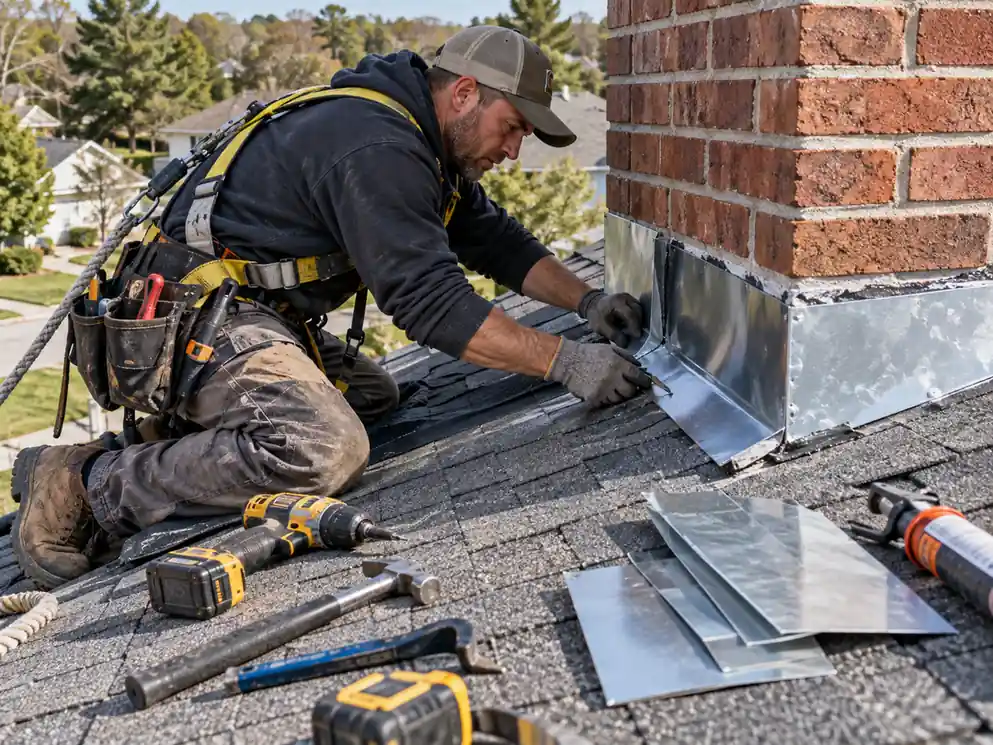
Flashing overlaps
A weak head, side, or lower flashing detail may allow water in only when runoff volume rises enough to reach the vulnerable joint.

Updated October 1, 2026
A skylight that stays dry in light rain but leaks during stronger storms is giving you a useful clue. Higher runoff and wind-driven rain can expose vulnerable roof and flashing details that remain dry in calmer weather.

A roof detail can appear watertight during a light shower and still leak during a stronger storm. Heavier rainfall increases the volume of runoff moving down the roof toward the skylight, while wind can push water toward joints that normally receive less direct exposure.
That makes a heavy-rain-only leak useful diagnostic information. It does not tell you the exact failed component, but it narrows the conditions that should be reproduced or considered during inspection.
Note whether the leak happens in every rain, only in heavy rain, mainly with wind, or only from one side of the skylight.
A weak head, side, or lower flashing detail may allow water in only when runoff volume rises enough to reach the vulnerable joint.
A damaged shingle or underlayment problem upslope can send water toward the opening during prolonged rain.
Wind-driven rain can reach vertical or protected interfaces that stay relatively dry during calm rainfall.
Debris or a poorly draining detail can alter the way water moves around the skylight as rainfall becomes heavier.
During a windy storm, rain does not fall straight down. It can be pushed toward the side of a skylight, a roof-to-wall intersection, or a joint that normally stays protected.
If the skylight leaks only when storms arrive from a particular direction, mention that detail. It can help focus inspection on the side, head, or surrounding roof area that receives the unusual exposure.
The National Weather Service Tampa Bay office defines the rainy season for most of West Central Florida as roughly late May through early October, with frequent showers and thunderstorms. Heavy rainfall is a recurring warm-season hazard, and wind can accompany stronger storms.
For a Lakeland homeowner, that means a skylight leak may appear repeatedly during the wet season even if it stays dry for long stretches during calmer weather.
Protect people and the interior first. Move vulnerable belongings where practical, place a container under a drip if it can be done safely, and photograph the moisture pattern. Avoid climbing onto a wet roof during active rain.
Once conditions are safe, the skylight and surrounding roof can be evaluated together. If the leak is recurring, use the Skylight Leak Repair service page to describe the pattern.
A wet roof can be hazardous, and a temporary surface patch applied in unsafe conditions may not address the real source anyway.
A roof is designed to shed water continuously. During a light shower, runoff may move around a skylight without reaching a marginal joint. During prolonged or intense rainfall, more water passes over the same area for longer, increasing the chance that a weak overlap, damaged shingle, or poorly drained transition becomes exposed.
The upslope side of the skylight receives runoff from the roof area above it. A problem here may show up only after enough water accumulates.
Side details must interweave with the roof covering so water can continue down the roof instead of moving behind it.
The downslope side must return water cleanly to the roof surface. Debris or poor integration can interfere with that path.
A damaged shingle or underlayment problem above the skylight may only leak when rainfall lasts long enough for water to travel toward the opening.
If water appears almost immediately after rain begins, the vulnerable area may be directly exposed. If the leak starts only after 20 or 30 minutes of hard rain, the pattern may suggest water is accumulating, traveling, or reaching the skylight from a larger roof area.
Homeowners do not need to time the storm precisely. Even a simple note such as “only after prolonged rain” can make the initial diagnosis more focused.
Water that enters the roof assembly can remain in insulation, underlayment, wood, or interior finishes after the exterior rain has stopped. That means dripping or staining can continue even though the storm is over.
A delayed drip does not necessarily mean new water is still entering. It may be stored moisture finding a path downward. This is another reason interior symptoms should be interpreted together with roof conditions and storm timing.
If the same area becomes wet in multiple storms, the pattern is more useful than a one-time splash or isolated stain.
Do not wait for a small intermittent leak to become a larger interior problem if the same skylight repeatedly wets drywall, trim, insulation, or flooring. Recurring storm-only leaks can still cause cumulative damage even when the roof appears dry between storms.
If the skylight itself looks intact, the next step may still be a flashing or surrounding-roof repair rather than replacement. The Repair or Replace a Leaking Skylight? guide explains that decision in more detail.
After the roof is dry enough to inspect safely, the useful focus is the water path around and above the skylight. That can include the head flashing, side flashing, sill area, nearby shingles, exposed fasteners, sealant condition, debris accumulation, and roof surface upslope from the opening.
Interior evidence also matters. Damp insulation, staining at one corner, or moisture following the light well can help connect the indoor symptom to the exterior roof geometry. None of these clues should be treated as proof by themselves, but together they can narrow the likely failure.
If the storm pattern consistently points to one side of the skylight, that information should be preserved rather than erased by indiscriminate surface patching before the area is evaluated.
Wind can push water toward joints and vertical interfaces that receive less direct water during calm rainfall.
No. Wet roofs can be hazardous. Protect the interior where safe and wait for conditions that allow exterior inspection without unnecessary risk.
Yes. Water can enter through damaged roofing upslope and travel toward the skylight opening before becoming visible indoors.
Not automatically. The source may be flashing, surrounding roofing, or another detail rather than the skylight unit itself.
These references provide general technical, weather, cost, or permitting context. They do not replace inspection of a specific roof or skylight.
Describe where the moisture appears and when it happens so the roof, flashing, skylight assembly, and condensation can be separated logically.