Leak source
Roofing, flashing, glazing, frame, or seal work each involve different labor and materials.

Updated October 1, 2026
Skylight repair pricing depends on what actually failed. A localized flashing repair, surrounding roof repair, glazing problem, and full skylight replacement are not the same project.
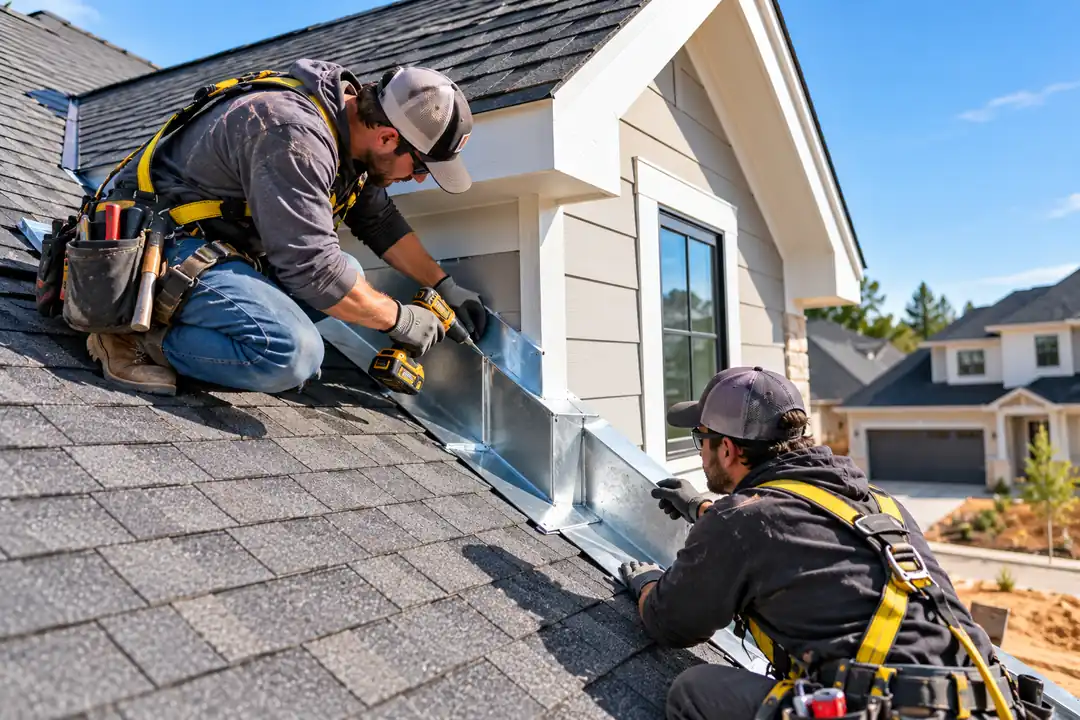
The visible stain does not tell you whether the job is a small flashing repair, surrounding roof repair, seal or glazing work, interior damage repair, or full skylight replacement. Those are materially different scopes.
For that reason, the most useful estimate comes after the leak source and affected components are identified.
Angi's September 2026 data reports a typical national skylight-repair range of about $454 to $1,514, with an average around $961. That is not a Lakeland quote and should not be used as one.
Roofing, flashing, glazing, frame, or seal work each involve different labor and materials.
Steeper or harder-to-reach roofs can add setup and labor complexity.
Fixed, venting, deck-mounted, and curb-mounted units differ in components and access.
Wet decking, underlayment, insulation, drywall, or trim can expand the project beyond the skylight itself.
One homeowner may need a localized flashing correction with otherwise sound roofing. Another may have deteriorated decking, damaged interior finishes, difficult roof access, and a skylight unit that also needs replacement.
Both projects can start with the same visible symptom—water around a skylight—but the underlying work is completely different.
The City of Lakeland says roof repairs generally require permits subject to limited exceptions. Its published fee schedule is based on the approved scope and valuation, and the City notes that fees can change.
If the work becomes skylight replacement rather than a localized leak repair, the permit path may also change. That is another reason a reliable estimate should follow diagnosis rather than precede it.
Roof access, local labor, permit scope, skylight type, material condition, and hidden water damage can move a real project well outside a national average.
Share where the moisture appears, when it happens, whether the skylight has been repaired before, and what type of roof surrounds it if known. Photos of the interior stain and the skylight from the ground can also help explain the problem before an on-site evaluation.
If you are deciding between localized repair and replacement, read Repair or Replace a Leaking Skylight? before treating price as the only decision factor.
A small ceiling stain can come from a repair that is simple to access—or from a roof opening that requires shingles, flashing, and damaged substrate to be removed and rebuilt. The visible symptom is therefore a poor way to estimate cost by itself.
When the repair is truly limited to a compatible seal or small component, the scope may remain relatively contained.
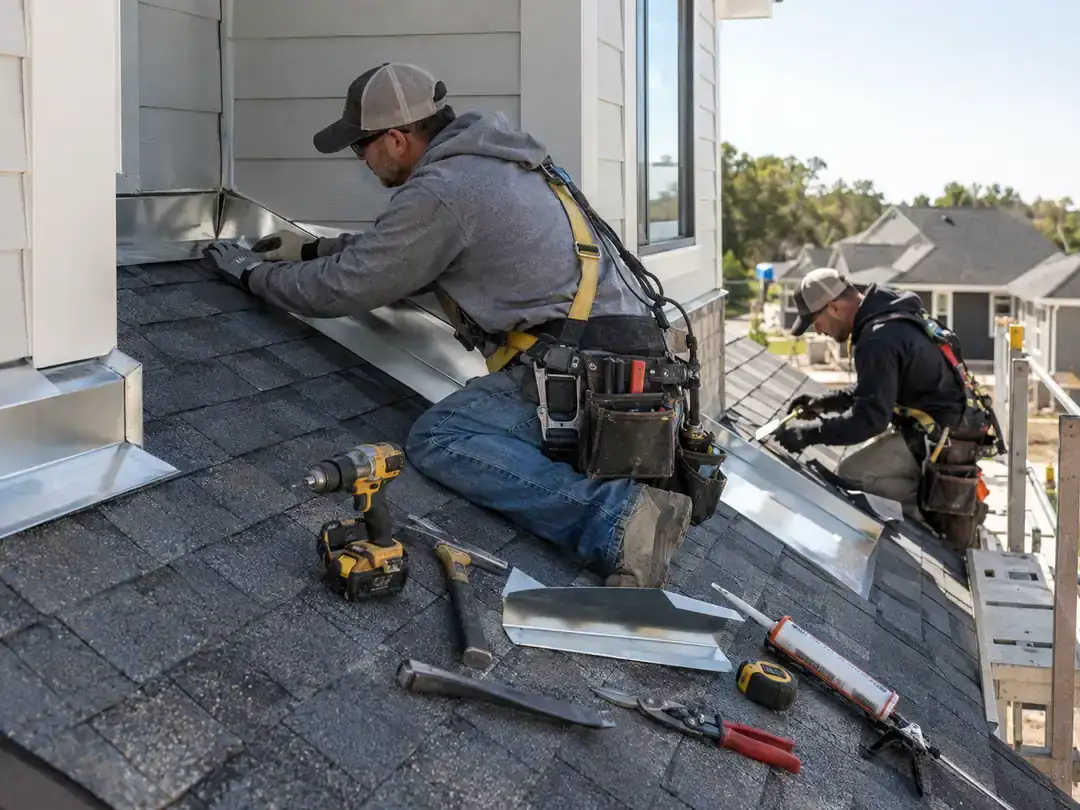
Flashing work can require surrounding roofing to be carefully opened and re-integrated around the skylight.
Unit-level repairs may require specialty parts and can cost more than a roof-only repair.
Replacement changes the scope from stopping one leak to removing the existing unit and integrating a new skylight into the roof.
If water has been entering for some time, the repair may expand beyond the skylight itself. Roof decking, underlayment, insulation, drywall, trim, or paint can all be affected depending on the path and duration of the leak.
This is why a low-cost surface patch and a proper repair can be very different estimates even when both are described casually as “fixing the skylight leak.”
A low, walkable roof with clear access is not the same project as a steep roof, upper-story skylight, or tight roof geometry where setup and fall protection take more time. Access does not change the leak itself, but it can change how safely and efficiently the work can be completed.
That is one reason online averages should be treated as context rather than a substitute for an actual scope.
Angi's current 2026 data is useful for broad context, but it does not account for the exact Lakeland property, roof geometry, skylight type, or hidden damage.
Price should be considered together with the condition of the skylight and surrounding roof. A repair can still be the better choice when the unit is sound and the failed component is localized. Replacement can make more sense when the unit itself is deteriorated or the roof is already being opened for broader work.
The companion Repair or Replace a Leaking Skylight? guide explains that decision without using a rigid age or percentage rule.
Two estimates can differ because they are solving different versions of the problem. One may assume a surface reseal, while another includes removing shingles, replacing flashing, repairing damaged decking, reinstalling roof materials, and addressing interior moisture damage.
Before comparing prices, ask whether each scope identifies the suspected leak source, explains which materials will be opened or replaced, states whether permit work is included, and clarifies what happens if hidden damage is found.
A lower number is not automatically better if it leaves the failed water-shedding detail untouched. Likewise, a larger scope is not automatically necessary if the problem is genuinely localized.
A useful estimate should connect the price to the work being proposed. If the scope is vague, it is difficult to know whether the estimate addresses the source of the leak or only the visible symptom.
Ask whether the proposed work is aimed at flashing, surrounding roofing, the frame, glazing, sealant, or another component.
Shingles, flashing, trim, or other materials may need to be opened to reach the failed detail.
Hidden damage can change the scope. The estimate should explain how additional work would be handled.
If replacement is proposed, the reason should be tied to the condition of the skylight or repairability of the installation rather than the existence of a leak alone.
Angi's September 2026 national project data reports a typical range of about $454 to $1,514, with an average around $961. That is national context, not a Lakeland quote.
Not necessarily. The failed component matters more than the label. A localized flashing issue can be smaller in scope than glazing or full-unit work.
Yes. If the work requires permitting, current permit and review fees can become part of the project cost.
Water can affect decking, underlayment, insulation, drywall, or trim. Those repairs are outside the skylight itself and can broaden the scope.
These references provide general technical, weather, cost, or permitting context. They do not replace inspection of a specific roof or skylight.
Describe where the moisture appears and when it happens so the roof, flashing, skylight assembly, and condensation can be separated logically.